We get this call several times a week, and it almost always arrives in the same order. The door came off. Someone tried to lift it back on. Now it is wedged, or the track has a lip bent over, or there is a fresh chip in the corner of the glass.
Here is what is actually happening inside the door, and what to do in the meantime.
Doors do not derail for no reason
The panel sits in the lower track by geometry, not by any latch or clip. The rollers are set deep enough in the channel that the door cannot climb out of it. When a panel comes off, one of a small number of things has changed:
- The rollers have collapsed. As the wheel or its housing wears down, the panel drops. Eventually it is riding so low that the retention geometry no longer holds.
- The track is deformed. A dropped object, years of dragging, or a previous forced re-seating has rolled the metal lip over. The panel now has a ramp to climb.
- The panel is out of square. One carriage sank faster than the other, so the door approaches the track at an angle instead of straight down into it.
- Debris. Less common as a sole cause, but a hard object in the channel can lift a wheel just enough at the wrong moment.
Notice that none of these are fixed by putting the door back. Reseating it treats the event, not the condition that produced it, which is why doors that get lifted back on tend to come off again within weeks.
Why forcing it is the costly move
A large slider is heavy, awkward, and made mostly of tempered glass held in an aluminum frame. When two people wrestle it back into a channel it does not want to enter, several things can happen at once, and we see all of them:
- The lower track lip folds over, converting a roller repair into a track replacement.
- The frame corners get racked out of square, which no adjustment screw can fully undo.
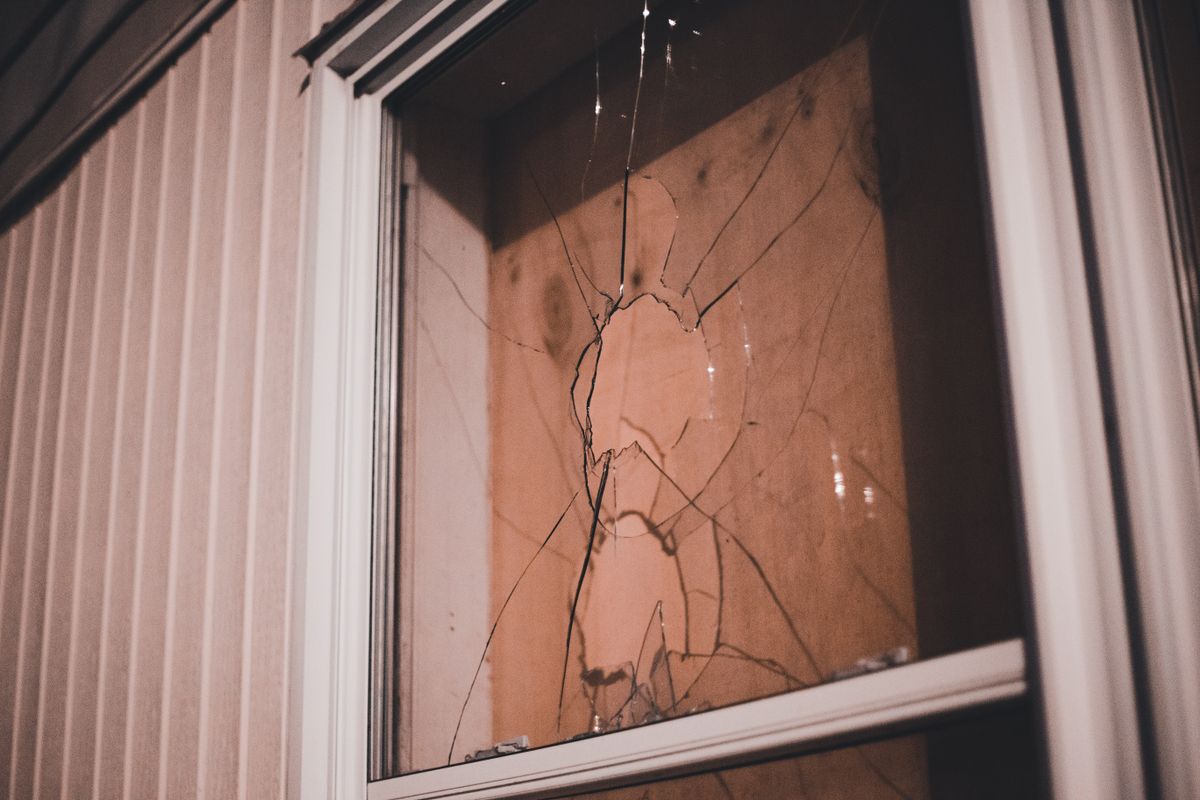
- The glazing takes a point load and the tempered pane fails, sometimes right then, sometimes three days later.
- Someone gets hurt. Glass panels do not fail gracefully.
The rule of thumb we give homeowners: if the panel does not settle back with light, controlled effort, stop. Resistance means something is bent, and force will not straighten it.
What to do right now
If the door is off but still standing in the frame:
- Do not keep operating it. Every pass grinds the damaged area further.
- If the panel is leaning or unstable, brace it. A length of timber wedged between the panel and the floor, or against the fixed panel, is enough. Keep children and pets out of the room.
- Secure the opening. A derailed door often will not lock. A dowel or cut broom handle laid in the track behind the panel is a reasonable overnight measure.
- Take two photos, one of the bottom rail and one of the track from the side. If you send those with your service request, we can usually tell before arriving whether the visit needs a track cap on the van.
If the panel is fully out of the frame and lying down, leave it flat and supported on its long edge, not standing on a corner. Corners are where tempered glass concentrates stress.
What a technician actually does
The visit is less about lifting and more about diagnosis. A door that derailed once will derail again unless the underlying condition is corrected, so the sequence looks like this:
- Remove the panel properly, which usually means backing out the adjustment screws to drop the rollers and tilting the panel out of the upper channel.
- Inspect the carriages. On a derailed door they are almost always finished.
- Inspect and straighten or cap the track. If the lip is rolled, a stainless cover restores a clean running surface without replacing the sill.
- Fit new carriages, reseat the panel, and set both adjustment screws so the door hangs square.
- Re-align the lock keeper, because the panel height has just changed.
That is typically one visit. Where it stretches is when the frame itself has been racked by earlier attempts to force the door, or when the glass has been compromised and needs to be cut and reglazed.
Preventing the next one
Derailment is nearly always the final symptom of roller wear that had been announcing itself for a while. If the other doors in your house are getting heavy, grinding, or sitting crooked in their frames, they are on the same path. Handling them while they are still merely annoying is considerably cheaper than handling them after they let go.
Want it looked at by someone who does this daily?
Free onsite diagnosis anywhere in Florida, flat pricing before we start, and most doors finished in a single visit.